BMW just lit up the premium EV SUV segment with the 2026 iX3, the first full production model on its much-talked-about Neue Klasse platform. This isn’t just “another electric BMW.” It’s the car BMW is using to reset its electric strategy: new EV-only architecture, up to 805 km claimed range, 400 kW ultra-fast charging, a new “digital nervous system,” and a cabin built around the brand-new Panoramic iDrive. It premiered at IAA Mobility 2025 and will reach key markets from early–mid 2026, setting the tone for 40 more BMW launches on this platform. theaustralian.com.au+3bmw.co.uk+3bmwgroup.com+3
Neue Klasse: Why This iX3 Matters
BMW has been selling electric SUVs before, but they were mostly built off multi-energy platforms. The 2026 iX3 is different — it’s the first of the Neue Klasse generation, meaning the chassis, battery, electronics, and software were all designed for EV from day one. That allows BMW to lower the SUV’s drag to an impressive 0.24 Cd (very low for an SUV), package a bigger battery (around 109 kWh), and still leave space for proper luggage and a front trunk. DIE WELT
BMW says this new electrical and computing architecture allows:
-
Faster over-the-air updates
-
More powerful driver-assist (heading toward Level 3)
-
Better energy management and recuperation
-
Bidirectional / vehicle-to-home style charging in later updates
In short, this is the car that shows how future BMW EVs will feel.
Powertrain, Battery & Range
At launch, the iX3 comes as iX3 50 xDrive — dual-motor, all-wheel drive, with up to 345 kW (≈469 hp) and 645 Nm, enough for 0–100 km/h in about 4.9 s. That’s right in the heart of performance EV SUVs, but the headline isn’t speed — it’s range. BMW is targeting up to 500 miles / 805 km on a charge (likely WLTP), thanks to its new sixth-gen eDrive, high-efficiency motors, and a big battery. That number, if it holds in independent tests, leapfrogs many current rivals and directly answers buyers who want a German EV that can do road-trip distances. bmw.co.uk+2electrive.com+2
Charging is equally aggressive: up to 400 kW DC. BMW says you’ll be able to add roughly 350 km in about 10 minutes on a suitable charger — that’s super-charger territory and positions the iX3 as a true long-distance EV, not just a city premium SUV. theaustralian.com.au
Design: Classic BMW, Future Proportions
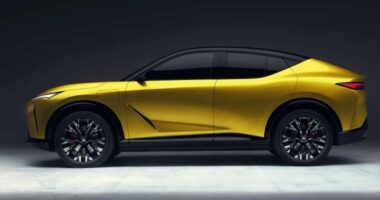
BMW resisted going full spaceship. The 2026 iX3 still looks like a BMW SUV — strong shoulder line, Hofmeister kink, upright stance — but with cleaner surfacing, slimmer lighting, and a grille treatment that’s more aerodynamic than ornamental. On the IAA car, the proportions were athletic but not oversized: about 4.78 m long, 520–1,750 L of cargo space, and even a 58 L frunk for cables. That makes it practical for families without feeling like a bus. DIE WELT
BMW also paid attention to aero: sealed front areas, flush glazing, aero wheels — all working toward that 0.24 Cd. Every percent of drag reduction is extra range, so this isn’t styling for styling’s sake.
Interior: Panoramic iDrive & “Digital Nervous System”
Inside, the iX3 debuts Panoramic iDrive, basically a wide, curved, full-width digital surface that ties instruments and infotainment together, and a simplified dash with fewer physical buttons. The new central computing stack — BMW called it a “digital nervous system” — allows richer graphics, better voice, and more responsive driver-assist. This is also where BMW wants to compete with Tesla, Mercedes Hyperscreen, and Chinese EVs that have very fast UI. bmw.co.uk
Rear space is flat-floored (EV benefit), materials look more sustainable, and BMW claims a 42% lower lifecycle carbon footprint versus the previous iX3, partly because the Hungary plant runs on 100% renewables. That’s a nice bullet for eco-conscious buyers. theaustralian.com.au
Market Position: Who Should Be Worried?
This car lands right in the crosshairs of:
-
Tesla Model Y Long Range / Performance (but iX3 aims higher in quality)
-
Mercedes-Benz EQE SUV (EQE 350 4MATIC)
-
Audi Q6 e-tron and upcoming PPE-based SUVs
-
Chinese long-range EV SUVs (BYD, Zeekr)
BMW’s key message is: “We can match or beat your range, and still feel like a BMW.” The 805 km claim and 400 kW charging are especially aimed at markets like Australia and Europe where BMW said the car will arrive mid-2026. theaustralian.com.au+1
Strengths
-
First BMW on Neue Klasse → future-proof platform
-
Huge claimed range (up to 805 km)
-
400 kW charging → 10-minute meaningful top-ups
-
Proper BMW driving character expected (50:50-ish balance, tight body control)
-
Practical SUV body with frunk
-
Sustainability story (Hungary plant, lower CO₂)
Weak Points / Things to Watch
-
Real-world range may be lower on highway / cold climates
-
Pricing: early info suggests around $60,000 in the U.S. market, which is premium for a mid-size SUV — BMW will need to justify it with equipment. BMW USA
-
Charging at 400 kW depends on network availability
-
Launch is staged (Europe first, then other markets), so some buyers will wait into 2026
Should You Buy/Import/Feature It?
For content creators, dealers, and EV-focused sites, the 2026 iX3 is perfect material: it’s “first of a new era,” has headline numbers (805 km / 400 kW), and wears a big badge. For buyers, it solves the classic premium-EV headache: “I want German quality, SUV practicality, and Tesla-level range.” On paper, this is the first BMW that really says “yes” to all three.