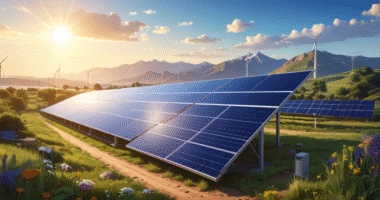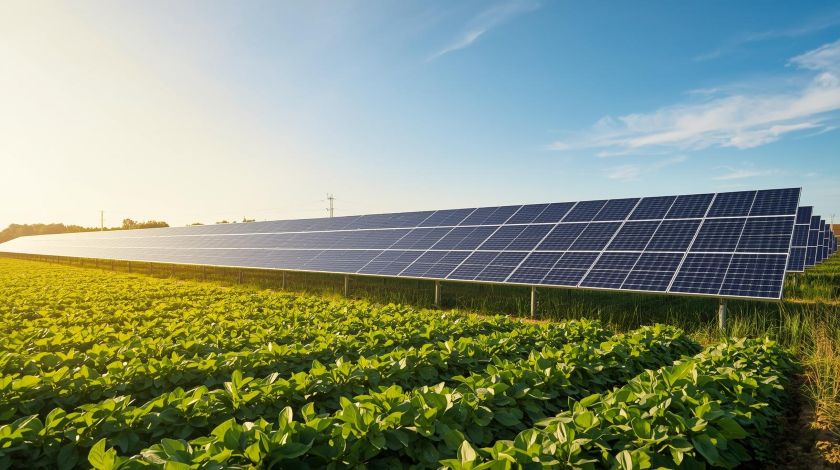

The rising demand for renewable energy and sustainable agriculture has given birth to an innovative solution known as agrivoltaics—the practice of farming beneath solar panels. In 2025, this trend is gaining momentum worldwide, as governments, farmers, and energy companies explore ways to maximize land use while producing both food and clean energy.
This article explores how farming beneath solar panels works, its benefits, challenges, and why it could be the future of agriculture and renewable energy combined.
What Is Agrivoltaics?
Agrivoltaics, also called solar farming, is the dual use of agricultural land for crop production and solar energy generation. Instead of choosing between farming or solar installations, farmers can do both by installing elevated solar panels that allow crops to grow underneath.
How It Works
- Elevated solar panels: Panels are installed higher than normal, allowing sunlight to pass through and crops to grow beneath.
- Partial shading: Crops receive filtered sunlight, which can reduce heat stress and improve water retention.
- Energy production: Panels generate clean electricity for the farm or local communities.
- Land optimization: Farmers make use of land for two purposes—agriculture and renewable energy.
Why Farming Beneath Solar Panels Is Growing in 2025
The year 2025 marks a turning point for renewable agriculture due to three major factors:
- Rising electricity costs – Farmers face higher utility bills for irrigation, cold storage, and machinery. Solar panels provide a cost-effective alternative.
- Climate change challenges – Heatwaves, droughts, and soil degradation push farmers to explore new farming methods. Solar panels provide shade and protect crops.
- Government incentives – Many countries now provide subsidies for renewable projects, including agrivoltaic systems.
Together, these trends make agrivoltaics an attractive option for sustainable farming and energy production.
Benefits of Farming Beneath Solar Panels
1. Dual Revenue Streams
Farmers earn from both crop yields and solar energy sales. This diversification reduces financial risk, especially during poor harvest years.
2. Reduced Water Usage
Shaded crops require less irrigation. Research shows that agrivoltaic systems can cut water usage by 15–25%, making it vital in drought-prone regions.
3. Improved Crop Yields
Surprisingly, some crops like lettuce, spinach, tomatoes, and berries thrive in partial shade. Solar panels protect crops from direct heat, leading to higher yields in hot climates.
4. Clean Energy Generation
A one-acre solar farm can produce enough power to supply 30–40 homes annually. Farmers can offset their own energy costs or sell power back to the grid.
5. Soil and Livestock Benefits
- Shaded soil retains moisture longer.
- Sheep and goats can graze beneath solar arrays, reducing mowing costs.
- Pollinator-friendly plants (like clover and wildflowers) can thrive under panels, boosting biodiversity.
Popular Crops for Agrivoltaics in 2025
Not all crops thrive under panels, but certain plants adapt well:
- Leafy greens (lettuce, spinach, kale)
- Berries (strawberries, blueberries)
- Root crops (carrots, potatoes, beets)
- Herbs (basil, cilantro, mint)
Heat-sensitive crops benefit most, while tall crops like corn are less compatible.
Global Examples of Agrivoltaics
United States
Several states, including Arizona, California, and Massachusetts, have pilot projects combining solar farms with vegetable and fruit crops.
Japan
Japan has over 3,000 agrivoltaic projects, with farmers growing tea, rice, and vegetables under solar panels.
Europe
Germany and France are leading in agrivoltaics, offering subsidies for farmers who install solar arrays while continuing food production.
Developing Countries
In regions like India and Kenya, agrivoltaics provide electricity for irrigation pumps while increasing food security.
Challenges of Farming Beneath Solar Panels
While promising, agrivoltaics has challenges:
1. High Initial Costs
Installing elevated solar arrays costs more than traditional ground-mounted panels. Farmers may need subsidies or partnerships to afford setup.
2. Crop Limitations
Not all crops thrive under panels. Tall crops like corn or wheat may not grow effectively in shaded conditions.
3. Maintenance Complexity
Managing both solar infrastructure and crops requires coordination. Panels need cleaning, while crops demand regular care.
4. Policy and Zoning Barriers
In some regions, zoning laws restrict combining farmland with solar projects. Policies need to adapt to support agrivoltaics.
Future Trends: Agrivoltaics in 2025 and Beyond
Agrivoltaics is expected to expand rapidly as both the agricultural and renewable energy sectors evolve. Here are some emerging trends:
AI-Driven Farming
Artificial intelligence will monitor crop growth and energy output, adjusting panel angles for optimal sunlight and shade distribution.
Floating Agrivoltaics
Crops grown on floating farms combined with floating solar arrays on reservoirs could revolutionize land and water use.
Smart Irrigation Integration
Solar-powered pumps and smart irrigation systems will make water management more efficient.
Expanding Crop Diversity
Ongoing research aims to expand the variety of crops that thrive in solar-shaded environments.
Financial Impact for Farmers
Farmers adopting agrivoltaics in 2025 could see:
- 20–30% reduction in electricity bills.
- Increased crop yields for shade-tolerant plants.
- New revenue streams from energy sales.
Return on investment (ROI) for agrivoltaic systems is typically 7–12 years, but incentives and lower solar costs are reducing this payback period.
Conclusion: A Win-Win for Food and Energy
Farming beneath solar panels is more than a trend—it’s a powerful solution for the future of agriculture and energy. In 2025, agrivoltaics is proving that land doesn’t have to be divided between farming and solar power. Instead, both can coexist to improve crop yields, cut water use, reduce costs, and generate clean electricity.
As governments, farmers, and renewable energy companies collaborate, farming beneath solar panels could become a cornerstone of sustainable agriculture worldwide.