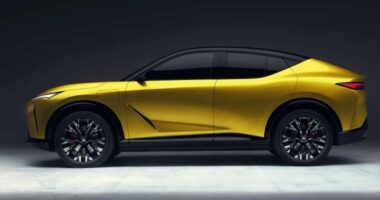
With the unveiling of the sixth-generation Toyota RAV4, the Japanese automaker has set its sights on a future where electrified powertrains, advanced tech, and global practicality converge. Designed to meet shifting consumer demand and regulatory pressures, the 2026 RAV4 headlines Toyota’s refreshed SUV strategy—offering fully electrified choices (HEV and PHEV) for the first time in the model’s history. Wikipedia
In this review we’ll break down what makes the new RAV4 a standout, how it stacks up to rivals, and what buyers should note if they’re looking for a modern SUV that balances legacy and innovation.
Architecture & Powertrain: A New Chapter
Electrified-first mindset
Toyota’s shift in the sixth-generation RAV4 is significant: unlike previous years, buyers won’t just choose between standard ICE and hybrids—they’ll pick between hybrid electric (HEV) or plug-in hybrid (PHEV) as standard. According to the details, the RAV4 now offers variants ranging up to 320 hp for the PHEV and EV-capable systems built around silicon-carbide inverters and vehicle-to-home (V2H) tech. Wikipedia
This makes the RAV4 one of the first mainstream SUVs to embrace electrification as the default choice rather than a niche variant. For the average buyer, that means better fuel economy, stronger value, and a future-proof position as emissions regulations tighten.
Underpinnings & chassis refinements
Built on the GA-K platform with enhanced rigidity, reinforced sub-frames, and revised suspension, the new RAV4 benefits from improved structural integrity and dynamic behavior. Wikipedia
What this translates into on the road is a more composed ride, better handling precision, and the refinement to compete with premium rivals—without losing the utilitarian traits that made the RAV4 popular.
Driving dynamics & efficiency
While exact independent test figures for the PHEV model are still emerging, early numbers show that the 320 hp plug-in version can travel around 50 miles (≈80 km) in EV mode (North America estimate) before the petrol engine kicks in. Wikipedia
That EV capability combined with hybrid efficiency makes the RAV4 a compelling choice for both daily commuters and longer trips. The enhanced architecture also means the HEV versions will likely deliver better mpg than previous generations—which is a major draw for cost- and eco-conscious buyers.
Design & Interior: More Premium Than Ever
Exterior styling
Toyota has kept the upright, rugged silhouette of the RAV4 but refreshed it with three distinct design themes: “Core” (everyday), “Rugged” (off-road styling), and “Sport” (performance-leaning trims including GR Sport) for models like the new PHEV. Wikipedia
From angular LED lighting and a refined grille to pronounced wheel arches, the visual upgrade brings a sharper, more modern look. The updated stance and detailing make it feel less mainstream and more premium—a welcome evolution for existing RAV4 fans.
Cabin & technology features
Inside, the new RAV4 rises in quality with materials, finishes, and tech that match (and in some cases surpass) price rivals. The infotainment system now runs Toyota’s Arene platform, incorporating wireless smartphone mirroring and built-in connectivity, and the safety suite steps up with the new Toyota Safety Sense 4.0—adding features like front cross-traffic alert and predictive curve speed control. Wikipedia
For families and frequent travelers, the cabin’s refinement, improved ergonomics, and increase in usability (storage, flat-floor rear for the PHEV, etc.) rival many luxury small SUVs.
Practicality & everyday usability
One of the impressive aspects of the new RAV4 is its balance: you get upgraded features and a premium feel without sacrificing the everyday practicality that buyers expect. The revised architecture allows for smarter packaging, including improved rear legroom and cargo space in many trims.
For those who tow or need off-road capability, the “Rugged” trims offer stronger hardware while remaining efficient. All of which enhances the RAV4’s arsenal in an SUV segment that’s increasingly crowded.
Market Position & Strategic Implications
Why this matters for Toyota
The RAV4 has long been a global best-seller. By making it “electrified first,” Toyota signals that its mainstream SUV will carry the brand’s low-emission credentials forward without waiting for a niche audience.
This move has strategic implications: higher manufacturing efficiencies, a simplified model range, improved brand perception as environmentally aware, and potentially better resale value as regulators impose stricter emissions laws globally.
Competitive landscape
Against rivals such as the Honda CR‑V Hybrid, Ford Escape PHEV, and even premium entrants like the Volvo XC40 Recharge, the RAV4 brings a well-rounded package: strong brand recognition, reliability, a newly upgraded design, and now electrified power trains as standard.
In markets such as Europe and Asia, where hybrid and plug-in regulations are accelerating, the RAV4 is better positioned than many competitors who still tread old-school ICE roots.
Buyer considerations & region-specific notes
For buyers in mature markets (U.S., Europe, and Japan), the choice to go PHEV adds flexibility: daily commuting on pure EV, long-distance support from the petrol engine, and (likely) reduced maintenance. In emerging markets, Toyota’s global manufacturing footprint favors cost control and supply reliability.
However, potential buyers should pay attention to charging infrastructure for the PHEV (especially after the EV portion is depleted), the premium price of “Sport / GR Sport” trims, and local availability dates (some markets roll out later).
Also, in regions where ICE vehicles are still dominant, the upgraded HEV versions offer a smart stepping stone without committing fully to EV power yet.
Strengths, Weaknesses & What to Watch
Strengths
-
Electrified architecture makes the RAV4 future-ready.
-
Premium design and tech upgrades elevate the model.
-
Proven brand with a global service network.
-
Balance of practicality, usability and performance in one package.
Weaknesses
-
PHEV cost premiums may deter cost-sensitive buyers.
-
A true EV-only variant is not yet widely available; buyers committed to full EV may look elsewhere.
-
Charging infrastructure and ease-of-use for PHEVs are still reliant on external systems.
-
As competition increases, some rivals might offer better EV-only range or luxury finish for similar money.
What to watch
-
Real-world EV-only range and charging behavior of PHEV models.
-
Pricing structure: how much extra for “Sport/GR” trims and how that compares to competitors.
-
Global rollout timing—some markets may wait until 2026 or later.
-
Resale values and long-term maintenance costs of hybrid/PHEV systems compared with pure ICE or pure EV alternatives.
Final Verdict: A Modern SUV for Now and Tomorrow
The sixth-generation Toyota RAV4 makes a bold statement: that volume SUVs don’t need to compromise on tech, design, or efficiency. Whether you stick with the upgraded HEV model or opt for the PHEV version, you’re getting a vehicle built for the next decade and beyond.
For families, commuters, and SUV buyers who want future readiness without sacrificing reliability or practicality, the 2026 RAV4 is an impressive choice. It’s not just another iteration—it’s a reimagined SUV ready for an electrified era.
If Toyota delivers on price and rollout as promised, the RAV4 may once again dominate its segment—but this time, it’ll also lead in green SUV sensibility.
For buyers who’ve been waiting for the right moment to upgrade, that moment is here.