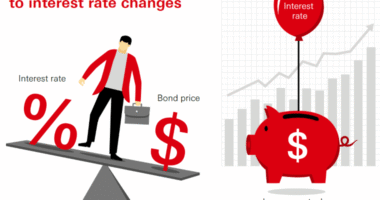
The world’s central banks have quietly changed course
After three turbulent years of inflation, high rates, and market uncertainty, the financial tide is turning again. Liquidity — the lifeblood of global finance — is making a cautious comeback. In 2025’s final quarter, central banks from Washington to Tokyo are signaling that the tightening cycle is over.
The U.S. Federal Reserve has already cut rates twice this year, the European Central Bank has hinted at another easing in December, and Asian economies — led by South Korea, India, and Indonesia — are ramping up growth support.
This collective shift marks a critical juncture: the end of the “survival” phase and the beginning of a “recovery” one. For investors, businesses, and consumers alike, understanding how this new liquidity wave flows through the system is the key to thriving in 2026.
What liquidity means — and why it matters now
In finance, “liquidity” describes how easily money moves through the economy — from central banks to commercial lenders, and eventually to households and markets.
When liquidity tightens (as it did in 2022–2023), credit dries up, asset prices fall, and growth slows. When it expands, risk appetite rises, borrowing becomes cheaper, and capital chases opportunity.
Today, global liquidity is expanding again for three main reasons:
-
Inflation retreat: As price pressures fade, policymakers have more room to cut rates.
-
Debt relief: Governments are refinancing at lower costs, freeing fiscal space for stimulus.
-
Technological transformation: AI, digital finance, and supply chain automation are boosting productivity, reducing cost pressures, and attracting capital flows.
But this expansion isn’t a free-for-all. Central banks are determined to avoid the mistakes of the 2010s — excess liquidity fueling asset bubbles. The 2025–2026 cycle is likely to be measured, targeted, and data-dependent.
Equity markets: early signals of optimism
Global equities are responding decisively to the liquidity turn. The S&P 500 is up 9.2% year-to-date, while Asia’s MSCI ex-Japan index has climbed nearly 11%.
Investors are shifting portfolios from defensive sectors (utilities, staples) toward growth and innovation, especially in areas where easing credit costs amplify returns.
Sectors to watch
-
Artificial intelligence & automation: Companies providing hardware and compute infrastructure continue to attract inflows. Cloud service providers and AI chipmakers lead the charge.
-
Green transition & energy tech: With funding costs falling, renewable energy firms and grid modernization projects are regaining investor appeal.
-
Financials: Banks, insurers, and fintechs stand to benefit as credit expansion resumes and loan demand rebounds.
Regional outlook
-
United States: Earnings momentum is picking up again, but valuations remain stretched. Investors should focus on quality growth and dividend resilience.
-
Europe: Structural reforms and lower inflation support a mild recovery, though currency strength could limit export gains.
-
Asia-Pacific: Expected to lead global growth in 2026, fueled by domestic demand and capital inflows chasing yield.
Equity investors should adopt a barbell strategy — balancing exposure between high-growth innovators and stable dividend payers.
Bonds: The quiet hero of 2025
Few asset classes have undergone as sharp a turnaround as bonds. After a brutal bear market from 2021–2023, yields have fallen sharply since mid-2024.
-
The U.S. 10-year Treasury yield is down to 3.9% from 5.1% a year ago.
-
European sovereign bonds have rallied as the ECB’s easing cycle approaches.
-
Emerging-market debt, once shunned, now offers attractive real yields amid currency stability.
For 2026 positioning:
-
Core allocation: Intermediate-duration bonds (5–10 years) remain optimal.
-
Strategic tilt: Blend sovereigns with high-grade corporate bonds to enhance yield.
-
Emerging market exposure: Selectively add EM debt in Asia and Latin America where policy credibility is strong.
The new bond bull market is likely to be slow but steady, rewarding patient investors with 6–8% total annual returns.
Commodities: adjusting to new demand realities
The era of energy shocks seems to be behind us — for now. Crude oil trades around $77 per barrel, steady but no longer dictating global inflation trends.
However, structural shifts are underway:
-
Industrial metals like copper and lithium remain supported by EV and AI hardware demand.
-
Agricultural prices are stabilizing as climate-related disruptions ease.
-
Gold hovers near $2,150, supported by central bank purchases and investor hedging.
In this environment, commodities serve best as portfolio diversifiers, not primary growth engines. Exposure through index ETFs or infrastructure funds provides inflation protection without heavy volatility.
Currency outlook: the dollar loses its shine
The U.S. dollar, once the undisputed safe haven, is entering a cyclical weakening phase. The Fed’s rate cuts have narrowed yield differentials, and investors are diversifying globally.
-
The euro has strengthened to 1.14 against the dollar.
-
The Japanese yen is stabilizing after intervention support.
-
The Indian rupee and Indonesian rupiah are benefiting from strong capital inflows and fiscal stability.
For multinational investors, currency hedging becomes increasingly important. Expect broader dollar softness through mid-2026 — a tailwind for emerging markets and global commodities.
Digital assets: institutional acceptance deepens
The crypto winter is firmly over. Bitcoin remains near $113,000 and Ethereum around $3,950, both consolidating after record highs earlier this quarter.
Institutional adoption is accelerating:
-
Major banks are offering tokenized treasury products.
-
Asset managers are launching regulated crypto ETFs.
-
Stablecoin usage in cross-border trade is expanding, especially in Asia.
While volatility persists, crypto is transitioning from speculation to infrastructure investment. For diversified portfolios, a 2–5% allocation in large-cap digital assets or blockchain equity funds is increasingly mainstream.
Personal finance in the age of easier money
As rates fall and liquidity expands, households have a unique opportunity to reset their financial foundations.
1. Refinance strategically
Mortgage and personal loan rates are declining — refinance only if you can shorten the term or meaningfully cut monthly payments. Avoid overextending debt in anticipation of perpetual low rates.
2. Rebuild savings discipline
The easing cycle can tempt overspending. Prioritize rebuilding emergency funds (6–9 months of expenses) to buffer against unexpected shocks.
3. Invest with consistency
Reinvest savings into diversified funds — combining dividend-paying equities, balanced bond exposure, and inflation-protected assets.
4. Plan for long-term inflation
Even with cooling prices, inflation won’t vanish entirely. Maintain exposure to real assets like property, infrastructure, or commodities.
5. Focus on financial literacy
The next phase of global growth will reward informed savers. Understanding compounding, tax efficiency, and asset allocation is as vital as chasing yield.
Risk radar: lessons from the last cycle
Every easing cycle carries hidden traps. The top risks heading into 2026 include:
-
Over-leverage: Easy credit can inflate new debt bubbles in housing or corporate borrowing.
-
Policy reversal: A sudden inflation rebound could force central banks back into tightening.
-
Geopolitical stress: Energy disruptions, supply chain fragmentation, or digital trade wars could destabilize recovery.
-
Asset concentration: Tech-led rallies may obscure fragility in other sectors.
Diversification and discipline remain the best defenses. The smartest portfolios will be those prepared to endure both liquidity expansion and contraction.
The bottom line: a cautious return to optimism
2025 ends not with euphoria, but with relief. Inflation has cooled, liquidity is returning, and global growth is slowly reawakening.
For investors, this is not a time to chase quick gains—it’s a moment to rebuild portfolios for the next expansion cycle.
Patience, discipline, and selective risk-taking will define success in 2026.
The era of crisis management is ending. The era of intelligent positioning has begun.