
The emotional side of finance is back in charge
Markets are often described as rational systems driven by numbers — earnings, rates, inflation, and forecasts. But beneath all of that lies the most unpredictable variable of all: human psychology.
As 2025 enters its final months, a new phenomenon is emerging across global markets — the return of investor confidence. Despite geopolitical uncertainty, slowing growth, and residual inflation, optimism has returned faster than many analysts expected.
This shift isn’t purely based on data. It’s about sentiment, trust, and collective belief that the worst of the global economic turbulence is behind us. Understanding this psychological wave could be the key to positioning portfolios for the year ahead.
From fear to faith: what changed in 2025
For nearly three years, fear dominated financial decision-making. The post-pandemic inflation shock, aggressive rate hikes, and geopolitical tensions kept investors cautious. But the second half of 2025 tells a different story.
Three forces are driving this change:
-
Policy stability: Central banks, after years of tightening, are signaling predictability — the first ingredient of confidence.
-
Earnings resilience: Corporate profits, while not booming, have exceeded expectations in most sectors.
-
Liquidity return: Global money supply is expanding again, boosting asset prices and sentiment.
The psychological shift began in early Q3 2025, as investors realized that “higher for longer” was ending. What followed was not euphoria, but a steady normalization of optimism — a belief that markets could grow sustainably again.
The confidence cycle: how sentiment shapes markets
Market psychology follows cycles, often aligning — but not perfectly — with economic ones.
Phase 1: Fear and Capitulation
When uncertainty peaks, investors sell indiscriminately. This phase occurred from 2022–2023 when inflation and rate hikes crushed risk appetite.
Phase 2: Disbelief
Early signs of recovery are ignored; investors remain skeptical. Much of 2024 fit this pattern — strong earnings met with muted reactions.
Phase 3: Hope and Accumulation
As conditions stabilize, institutional investors quietly accumulate assets. That’s exactly what happened in early 2025.
Phase 4: Confidence and Expansion
Broad participation returns — retail investors re-enter, and capital inflows rise. This is where we stand today.
Phase 5: Euphoria (yet to come)
The danger zone — when markets rise beyond fundamentals. If liquidity keeps rising into 2026, this phase could appear by mid-year.
Understanding where we are in this psychological rhythm helps investors act rationally while others act emotionally.
Equity markets: optimism priced in, not overdone
The recent rally across global equities isn’t purely speculative. Earnings growth, cost discipline, and better credit conditions have all contributed to the rebound.
-
S&P 500: up 10.4% year-to-date
-
MSCI Asia ex-Japan: up 12.1%
-
European STOXX 600: up 8.9%
Investor psychology in motion
Retail inflows into ETFs and mutual funds have reached their highest level since 2021. Social media sentiment — a surprisingly accurate barometer — has turned net positive for equities for the first time in two years.
However, valuation metrics show restraint: P/E ratios are rising but remain below pre-pandemic peaks. This suggests rational optimism, not mania.
Sectors attracting confidence
-
Financials: Investors trust that rate cuts will improve margins and loan growth.
-
Technology: AI and automation remain narrative powerhouses.
-
Consumer discretionary: Confidence drives spending — a feedback loop that supports GDP growth.
In short, markets are no longer ruled by fear — but they’re not blind to risk either.
Bonds: steady confidence in stability
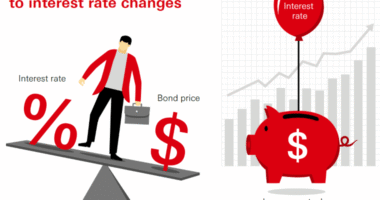
Bonds, traditionally the “rational” side of markets, are reflecting a similar confidence trend.
Yields have declined, but not collapsed — a sign of measured optimism. Investors are betting on soft landings rather than deep recessions.
-
U.S. 10-year Treasury: 3.8%
-
German Bund: 2.3%
-
Japanese Government Bond (10-year): 1.1%
Institutional portfolios are rebalancing from cash to intermediate-duration bonds, a sign that risk appetite is rising again. The fact that bond investors are moving from short-term safety toward duration exposure is one of the clearest signals of restored trust.
Commodities and currencies: stability breeds confidence
Commodity markets, once volatile from inflation and war, have entered a period of surprising calm.
-
Oil: steady at $78 per barrel
-
Gold: stable near $2,130
-
Copper: inching higher on AI hardware demand
Currencies, too, are reflecting equilibrium rather than turmoil. The U.S. dollar has softened, but not crashed; the euro and yen have stabilized. The Indian rupee continues to strengthen, a regional symbol of investor confidence in emerging markets.
Confidence-driven capital inflows are returning to Asia, especially in Indonesia, Vietnam, and Malaysia — economies with growing middle classes and strong policy credibility.
Crypto and digital finance: trust rebuilt through regulation
The crypto sector, once synonymous with hype, is now experiencing a mature phase of confidence.
Bitcoin remains near $115,000, Ethereum near $4,050, and daily transaction volumes have stabilized. But the real story isn’t price — it’s trust.
Institutional investors are now active participants, supported by clear regulatory frameworks in the U.S., EU, and Singapore. Tokenized assets, stablecoins, and digital treasury products are merging crypto with mainstream finance.
This quiet normalization marks crypto’s evolution from “speculative chaos” to functional infrastructure — a powerful indicator of confidence in technological finance.
The psychology of consumers: spending again, but wisely
Consumer sentiment indices in the U.S., Europe, and Asia have all risen in Q4 2025. Shoppers are spending again, particularly on travel, entertainment, and electronics.
However, unlike the post-pandemic splurge of 2021, this recovery is more measured. Consumers are confident but cautious — saving more while still participating in the economy.
Retail sales and credit growth data show an important trend: confidence with discipline. This is the healthiest psychological foundation for a sustainable recovery.
Central banks and confidence management
Monetary policy isn’t just about rates — it’s about signaling. Central banks are mastering the art of “confidence management,” using transparency and predictability as policy tools.
-
The Fed now communicates rate decisions months in advance.
-
The ECB openly discusses data-driven triggers for easing.
-
The Bank of Japan is normalizing policy without shocking markets.
This transparency anchors investor expectations and minimizes volatility. Confidence grows not only when rates fall — but when policy feels understandable.
Behavioral finance lessons: how investors can stay grounded
Confidence is a double-edged sword. It can fuel returns or inflate bubbles. Behavioral finance offers tools to navigate this delicate balance:
-
Recognize herd behavior: Just because markets rise doesn’t mean everyone’s right.
-
Use contrarian indicators: Overconfidence signals potential corrections.
-
Stay goal-focused: Investing should serve life goals, not emotional impulses.
-
Diversify by conviction: Don’t overexpose to any single theme — even AI or green tech.
-
Take profits periodically: Confidence without discipline leads to regret.
In a market driven by psychology, awareness of one’s own biases becomes a competitive advantage.
The confidence economy: what 2026 could look like
If this psychological momentum continues, 2026 could mark the transition from fragile recovery to sustained expansion.
Expect to see:
-
Stable growth around 3% globally.
-
Falling unemployment and wage normalization.
-
Stronger capital flows to emerging markets.
-
More IPO activity as companies capitalize on risk appetite.
But confidence must remain grounded. Should optimism turn into speculative excess, corrections will follow. The healthiest outcome is confidence with caution — optimism informed by realism.
The bottom line: confidence is the new currency
Confidence isn’t just sentiment — it’s capital. It fuels investment, spending, and innovation. The world’s recovery depends as much on psychology as on policy.
2025’s story has been one of resilience. 2026’s will depend on discipline.
As investors, understanding the emotional undercurrents of markets may be the most valuable skill of all—because in the end, finance runs on trust.