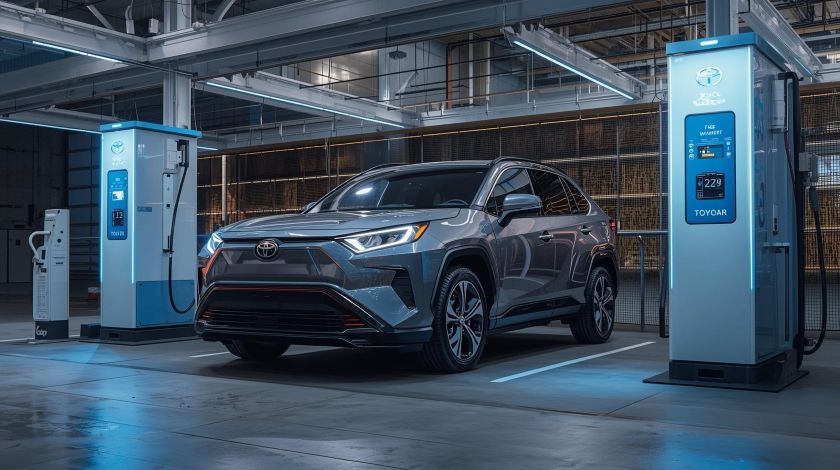

The automotive industry is undergoing a historic transformation, and Toyota remains at the forefront with its commitment to hydrogen fuel cell technology. While electric vehicles (EVs) have dominated headlines, Toyota believes hydrogen has an equally critical role in achieving a sustainable, zero-emission future. With the 2025 Toyota Mirai and next-generation hydrogen systems, the company has introduced a set of innovations that could reshape how consumers and industries think about clean mobility.
In this article, we’ll dive into Toyota’s 2025 hydrogen model breakthrough, explore its unique features, and assess how it fits into the wider automotive landscape.
The Evolution of Toyota’s Hydrogen Journey
From the First Mirai to 2025
Toyota introduced the first Mirai in 2014, becoming one of the earliest automakers to commercialize hydrogen fuel cell electric vehicles (FCEVs). Despite challenges like infrastructure limitations, Toyota pushed ahead with the second-generation Mirai in 2020, which offered better design, efficiency, and performance.
The 2025 Toyota Mirai takes another step forward, combining improved range, simplified trims, and new technologies, while simultaneously laying the groundwork for Toyota’s third-generation fuel cell system.
H2 Power: The Science Behind Toyota’s Fuel Cells
How Hydrogen Fuel Cells Work
Fuel cell vehicles generate electricity through a chemical reaction between hydrogen and oxygen, emitting only water vapor as a byproduct. Unlike battery EVs, FCEVs don’t rely on large lithium-ion packs. Instead, they store compressed hydrogen in tanks, offering fast refueling times and long driving ranges.
Toyota’s Focus on Efficiency and Durability
For 2025, Toyota has refined its hydrogen stack to deliver up to 20% more efficiency compared to earlier versions. This translates to longer driving distances per kilogram of hydrogen while also extending system life. Toyota is targeting diesel-like durability, making the technology more suitable for both passenger cars and heavy-duty commercial vehicles.
What’s New in the 2025 Toyota Mirai
Extended Range and Performance
The 2025 Mirai offers an impressive EPA-estimated range of around 402 miles, positioning it as one of the most efficient hydrogen cars available today. Combined with five-minute refueling times, this makes it attractive for long-distance drivers who may find EV charging inconvenient.
Simplified Model Lineup
Toyota has streamlined the Mirai into a single, feature-rich trim level (XLE). Instead of splitting between multiple versions, buyers now enjoy a fully equipped vehicle that includes:
- Panoramic View Monitor for improved visibility
- Digital Key technology for smartphone-based access
- Front and rear parking assist with automatic braking
- Heated side mirrors and footwell lighting
This approach reduces confusion while providing buyers with a luxury-like package at an estimated MSRP of $51,795.
Enhanced Ownership Benefits
Toyota continues to incentivize FCEV adoption with generous warranties and complimentary hydrogen fuel credits for early ownership years. Fuel cell system coverage extends to 8 years or 100,000 miles, signaling Toyota’s confidence in its durability.
The Third-Generation Fuel Cell System
While the 2025 Mirai showcases incremental improvements, Toyota’s real breakthrough lies in its third-generation fuel cell system, expected to enter wider commercial use soon.
Key Features of the New FC System
- 20% improved efficiency: Longer range on the same hydrogen supply
- Smaller, lighter stack: Improved packaging flexibility for various vehicle sizes
- Cost reductions: Critical for making hydrogen more competitive with battery EVs
- Extended durability: Built for heavy use in trucks, buses, and stationary power
Applications Beyond Cars
Toyota is positioning hydrogen not just for passenger vehicles but also for heavy-duty trucks, buses, trains, and even stationary energy generation. This diversification allows Toyota to lead in markets where battery EVs face limitations in weight, energy density, and downtime.
Toyota’s Vision for Hydrogen Infrastructure
Building the Ecosystem
One of the biggest hurdles for hydrogen adoption is the limited fueling infrastructure. Toyota is addressing this challenge by partnering with governments, energy companies, and industry leaders to expand hydrogen stations, particularly in North America, Japan, and Europe.
Beyond Mobility
Toyota has also created a new business unit, Toyota Hydrogen Solutions, focused on commercializing hydrogen beyond mobility—such as industrial applications and power generation. This broader ecosystem approach strengthens hydrogen’s long-term viability.
Advantages of Toyota’s Hydrogen Approach
Fast Refueling, Long Range
Compared to most battery EVs, hydrogen cars like the 2025 Mirai deliver gasoline-like convenience—a full tank in minutes and range exceeding 400 miles.
Zero Emissions
Hydrogen cars emit only water, making them ideal for cities and regions targeting aggressive carbon-neutrality goals.
Versatility
Hydrogen can power both light-duty and heavy-duty vehicles, where battery packs may be less practical.
Future-Proof Technology
By working on multiple fronts (hybrid, EV, and hydrogen), Toyota ensures flexibility to adapt as technology and infrastructure evolve.
Challenges Still Facing Toyota Hydrogen Cars
Infrastructure Gaps
Hydrogen fueling stations are still concentrated in select regions like California, Japan, and parts of Europe. Without wider rollout, mainstream adoption remains difficult.
Production Costs
While Toyota is reducing fuel cell stack costs, hydrogen production and storage remain expensive. Scaling green hydrogen (produced from renewable energy) is key to competitiveness.
Competition from EVs
Battery EVs continue to grow rapidly, with expanding charging networks and falling battery prices. For many consumers, EVs may feel like the more accessible choice in the short term.
The Road Ahead: What 2025 Means for Toyota and Hydrogen
Toyota’s 2025 hydrogen model demonstrates both commitment and progress. The Mirai’s improved range, refined features, and simplified lineup prove that hydrogen cars can be both practical and desirable. More importantly, the development of the third-generation fuel cell system signals Toyota’s intent to lead hydrogen adoption across multiple industries, not just passenger cars.
As governments push for carbon neutrality by 2030–2050, Toyota’s multi-pronged strategy—hybrids, EVs, and hydrogen—gives it a competitive edge. While challenges remain, the breakthroughs of 2025 show that hydrogen is not just an experiment; it’s a key piece of the future mobility puzzle.
Conclusion
Toyota’s 2025 hydrogen model represents more than just an update to the Mirai—it’s a statement about the future of clean energy. By focusing on efficiency, durability, and broader applications, Toyota is paving the way for hydrogen to become a mainstream energy solution.
For consumers, the 2025 Mirai offers a zero-emission vehicle with premium features, long range, and quick refueling. For industries, Toyota’s third-generation fuel cell system promises scalable solutions for trucks, buses, and beyond.
As the world debates between EVs and hydrogen, Toyota’s latest breakthroughs show that both can coexist, working together to build a greener and more sustainable transportation future.
Word count: ~1000