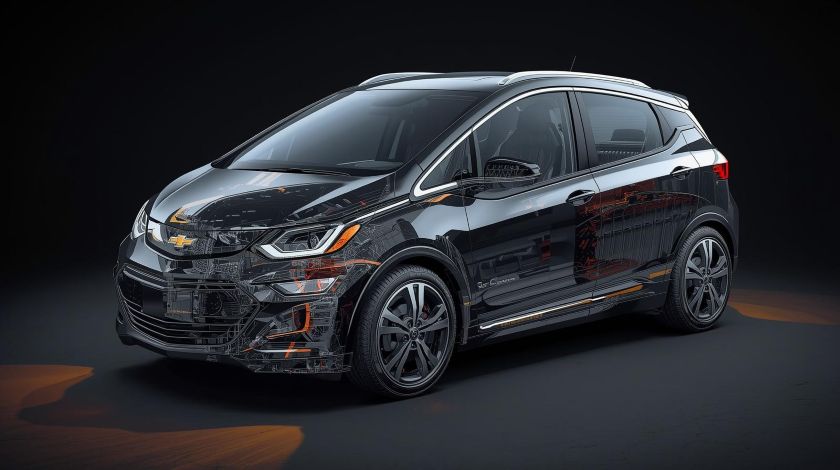

Introduction to the Chevy Bolt Reboot
When Chevrolet Bolt (commonly known as the Bolt) was first introduced, it was a game-changer in the affordable EV (electric vehicle) space. But now, the upcoming reboot or re-launch of the next generation Bolt is far more complex than you might think — even though from the outside it may look very similar. This article will unpack exactly why the reboot is so intricate: from architecture and battery to production logistics and homologation challenges.
The Context – Why a Reboot?
Outdated hardware and safety issues
The existing Bolt-generation, based on the older architecture, had run into several issues: battery fire risks, slower charging, limited fast-charge infrastructure compatibility, and an interior & tech suite that lagged behind newer EVs. For example, earlier Bolts were part of recalls due to battery defects. The Washington Post+2CBT News+2
Strategic shift for GM
General Motors made a forward-looking decision to invest in newer EV platforms and architectures. That meant the Bolt reboot needed to align with broader EV strategy: improved charging, new battery chemistry, updated electronics, and cost containment. KCLU+1
Same packaging, new internals
One of the trickiest imperatives: keep much of the existing body and structure (for cost and tooling reasons) but overhaul virtually everything under the skin. That makes the project more like a “new car under old skin” rather than a simple refresh. As the chief engineer put it: “while the steel remains the same, the car’s electrical architecture is almost entirely new.” Yahoo Autos
Major Technical Complexities
Electrical Architecture Overhaul
-
The previous generation of the Bolt used GM’s older “Global A” architecture. The reboot uses the newer “Global B” architecture (or equivalent) which supports much greater processing power, OTA (over-the-air) updates, advanced safety features, better cybersecurity, and enhanced connectivity. Yahoo Autos+1
-
That means every electrical component — switches, wiring harnesses, control modules, high-voltage components — has to be redesigned or re-configured. The engineering complexity is high because you’re essentially working with an existing body & chassis but radically new internals. Yahoo Autos
-
The tooling and production line also had to be shifted: GM moved tooling from the previous plant (Orion Assembly) to a different one (Fairfax, Kansas). While the tooling was being set up, design changes occurred, making coordination difficult. Yahoo Autos
Battery Chemistry & Packaging
-
The reboot introduces a shift to lithium-iron-phosphate (LFP) battery chemistry for the North American market — GM’s first using LFP here. Yahoo Autos+1
-
LFP offers cost advantages and safety improvements, but comes with trade-offs (lower energy density than nickel-manganese-cobalt cell types). That means packaging, module layout and attachments had to be re-engineered to fit into the same space as the outgoing pack. Yahoo Autos
-
The old chassis and battery tray had fixed mounting points, so GM had to design the new pack to match those, while delivering improved fast-charging capability (e.g., up to 150 kW) and similar or better range. Yahoo Autos
Fast-Charging & Charging Port Transition
-
The rebooted Bolt supports significantly faster DC-fast-charging (target about 10-80% in ~26 minutes) under ideal conditions. That’s a huge performance upgrade over the prior model. Yahoo Autos+1
-
Also, GM is adopting the Tesla-style NACS (North American Charging Standard) port in the new Bolt — meaning new charging hardware, supplier coordination and compatibility engineering. Yahoo Autos
Shared Components & Cost Efficiency
-
To keep costs in check (important for a vehicle in the “affordable EV” segment), GM shares many components with its larger EVs (such as the Chevrolet Equinox EV). For example, the motor and electronics unit in the Bolt reboot are borrowed from the Equinox EV. Yahoo Autos
-
While this helps cost and sourcing, fitting larger EV-SUV components into the smaller hatchback packaging of the Bolt creates mechanical and thermal engineering challenges: weight, torque calibration, cooling, sensor placement, etc. Reddit+1
Manufacturing & Production Logistics
-
GM had previously announced the Bolt would be discontinued in 2023, only to reverse course and decide to continue with a reboot. That caused delays and complexity in aligning manufacturing investment, tooling, supply-chain, and engineering timelines. KCLU+1
-
The new production plant (Fairfax, Kansas) had to retool for EV assembly, which means tooling, plant layout, supplier logistics—and doing all that while updates to the design were still being finalized. That concurrency raises risks and complexity. Yahoo Autos
Maintaining Legacy Fitment & Vehicle Identity
-
Because the outer shell and many body mounts are retained (for cost and legacy reasons), the engineering team had to ensure that the new internals (battery, electrical, cooling systems, sensor suites) integrate with the existing body structure without compromising safety, NVH (noise/vibration/harshness), packaging, or manufacturer crash-certification.
-
The reboot also needed to maintain the “Bolt identity” — compact, affordable EV — while matching the performance expectations of modern EV buyers. That balancing act adds further complexity.
Additional Challenges & Hidden Complexity
Software & Connectivity
-
With the new architecture comes significantly more advanced software: connectivity features, driver-assistance, OTA updates, cybersecurity protections. Building and validating these systems (especially in a vehicle segment that must keep cost low) is non-trivial. Yahoo Autos
-
GM also removed traditional smartphone mirroring support (Android Auto & Apple CarPlay) from the new architecture in North America, opting instead for GM’s own infotainment solution. That is a risk and adds development/validation burden. Yahoo Autos
Supplier & Cell Sourcing Risk
-
The LFP cells for the new Bolt are initially being supplied by a Chinese‐supplier (imported) until GM’s domestic plant (in Spring Hill, Tennessee) begins volume production in late 2027. That sourcing decision adds import cost risk and supply-chain complexity. Yahoo Autos
-
Because the battery chemistry changed and performance targets had to be met (range, fast-charging, safety), validation and testing timeline is longer than incremental updates would be.
Certification, Homologation & Timing
-
Although the outward appearance of the vehicle may look familiar, regulators, safety agencies, and crash-testing requirements treat the reboot as essentially a new car under the hood — meaning full testing, re‐certification, homologation.
-
Timing is tight: GM must launch the new Bolt to maintain competitiveness in the EV market, but delays in any subsystem (battery, electronics, plant tooling) can ripple through and push delivery back.
Cost Containment Pressure
-
The Bolt is positioned as one of the “affordable” EVs. That means margin pressure, cost constraints, and easier entry pricing expectations from consumers. But with all the above technical upgrades, cost containment becomes especially difficult.
-
Shared components help, but there’s a tension between delivering “premium EV features” (fast charging, connectivity, advanced driver-assistance) and keeping cost low.
Why It Looks Easy on the Outside (But Isn’t)
Consumers may notice only subtle exterior styling changes in the rebooted Bolt. The body shape, size, hatchback form are familiar. That can give the impression that this is just a “facelift.” However:
-
Underneath, nearly every major system has been redesigned or upgraded: electric architecture, battery chemistry, drivetrain components, software systems.
-
The fact that the exterior remains similar is part of the complexity: the engineering team had to fit entirely new internals into existing space, mounting points, packaging constraints.
-
Production at a new facility, supplier transitions, and cost targets add additional invisible complexity.
Implications for Buyers & the Market
For buyers
-
The rebooted Bolt promises improved performance: faster charging, modern connectivity, updated battery chemistry, and advanced driver-assistance. Car and Driver+1
-
However, complexity may mean initial availability delays, potential early-build teething issues (common with large redesigns), or constrained supply.
-
Because the interior may look similar, buyers might undervalue just how much new technology is inside — presenting a value proposition if the price is right.
For the market
-
The Bolt reboot is evidence that even when a vehicle appears superficially unchanged, the underlying transformation can be immense. This underscores how the EV transition for legacy automakers involves deep redesign, not just “electric motor + battery swap.”
-
If GM can deliver this reboot successfully at an affordable price, it may strengthen its position in the mass-market EV segment. But missteps could carry reputational risk (especially given the Bolt’s past issues).
Conclusion
The reboot of the Chevrolet Bolt is far more complex than meeting the eye. What looks like a familiar compact EV is, behind the scenes, essentially a new vehicle: new electrical architecture, new battery chemistry (LFP), faster charging capability, shared components from higher-volume EVs, new production tooling, and cost-containment pressure. All of these overlapping technical, manufacturing and strategic factors make the “simple” reboot anything but simple. For GM, getting it right is critical — and for buyers, recognizing the depth of the changes helps to appreciate the value (and risk) inherent in the new Bolt.
If you like, I can provide a detailed timeline of the Bolt’s development and this reboot, or compare the overhaul with what competitors are doing (e.g., Hyundai, Kia, VW). Would you like that?