
In the fourth quarter of 2025, the global economy is showing a curious mix of resilience and caution. On one hand, major economies are still growing—albeit slowly—and trade flows remain intact. On the other hand, structural headwinds including elevated tariffs, policy uncertainty, industrial weakness, and shifting consumer behaviour are forcing investors and financial planners to sharpen their scenarios. For investors, the question is how to position portfolios and personal finances in this “steady but unsure” backdrop.
The macroeconomic picture: steady growth, stretched expectations
According to the International Monetary Fund (IMF) October 2025 update, global growth is projected to reach 3.2 % in 2025, slightly up from earlier estimates, though still modest and well below pre-pandemic peaks. AP News+3IMF+3IMF+3 Advanced economies are forecast to expand at roughly 1.5 % this year, while emerging markets will grow just above 4 %. IMF+1
The U.S. outlook still merits attention: the Conference Board’s “Economy Watch – U.S. View (October 2025)” projects U.S. growth at about 1.8 % y/y in 2025 and 1.5 % in 2026. The Conference Board Meanwhile, trade data suggest Asia – especially export-oriented countries – may register stronger growth: the World Trade Organization (WTO) highlights that Asia’s export volume growth is expected around 5.3 % this year. World Trade Organization
Still, beneath the headline numbers are several warning lights: business confidence is weak in many regions, manufacturing is stagnating or contracting, and policy uncertainty (especially trade and tariffs) is muddying investment decisions. For example, in the U.S., while the service sector’s PMI rose to 55.2 in October, manufacturing remains modest and firms report low confidence over the next-year outlook. MarketWatch In Germany, the private-sector PMI jumped to 53.8 in October, with services strong but manufacturing still in contraction. Reuters
Why this matters for investors
The era of ultra-high growth may be behind us. Instead, the picture for late 2025 looks like “moderate growth + elevated risks”. That matters for portfolios and personal finance because strategy shifts when growth moderates and uncertainty rises.
Valuations and duration risk
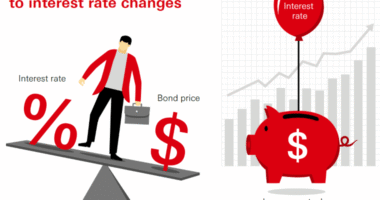
In a slower-growth regime, companies with long-duration cash flows (e.g., tech, software subscriptions, essential infrastructure) become more sensitive to discount-rate changes. If yields rise, valuations may compress. Likewise, in fixed income, extending duration (i.e., holding longer-maturity bonds) can be rewarding if yields fall, but risky if inflation or policy surprise arises.
Earnings visibility and risk appetite
With business confidence weak, earnings surprises are more likely to be on the downside. In such an environment, quality becomes more important than pure growth. Firms with strong balance sheets, predictable margins and global diversification should fare better than highly leveraged or highly cyclical ones.
Policy regime is unfolding
Central banks in major economies are walking a fine line: they must avoid choking off the economy while still keeping inflation risks in check. The IMF warns that trade policy shifts and tariff uncertainties remain a drag on longer-term prospects. AP News+1 For investors, this means that policy surprise—either via interest-rate moves, regulatory shocks, or trade policy—is a key tail risk.
Portfolio strategy for late 2025
Here’s how you might think about positioning in this backdrop:
Equities
-
Tilt toward quality companies: strong cash flows, resilient business models, preferably global diversification.
-
Avoid being overly exposed to “hope” stories (e.g., very early-stage companies with no earnings track record) unless you treat that as a small satellite allocation.
-
Maintain some exposure to cyclical names, but only where you have conviction—such as infrastructure themes, travel/hospitality if you believe in a post-pandemic rebound, or automation in manufacturing where productivity is still a driver.
Fixed income
-
Increase exposure to intermediate‐to‐long duration core bonds: With growth moderate and inflation potentially easing (but not guaranteed), there is scope for yields to drift lower, which would benefit bonds.
-
Maintain a barbell: some short-term holdings for liquidity and risk control, some longer maturities for yield/price appreciation.
-
Be cautious on credit spreads: if growth disappoints, spreads may widen—so higher-quality credit may be preferable to high-yield unless you have a strong conviction.
Cash & liquidity
-
The era of ultra-high savings/investment yields is likely over for now. If you hold cash, keep it tiered: an emergency buffer (3-6 months of expenses) in very short-term instruments, and then a portion in short-term bonds or CDs that may benefit from modest rate declines.
-
Keep “dry powder”: with elevated uncertainty, having liquidity allows you to act if dislocations occur (e.g., sharp market pullbacks, policy surprises).
Alternative assets & risk hedges
-
Consider exposure to assets that hedge policy/trade uncertainty: for example, gold or other precious metals may benefit if interest rates are cut and the dollar weakens.
-
Real assets (e.g., real estate, infrastructure) might offer inflation/hard-asset protection—but those come with their own leverage and liquidity risks, so treat them as selective exposures.
-
For crypto/alternative risk assets: treat as small satellite allocations only. These are high-beta plays and will react strongly to policy, liquidity, and sentiment shifts (both up and down).
Key policy & economic events to monitor
-
Central bank communications (e.g., Federal Reserve, European Central Bank, Bank of Japan): especially any changes in stance toward inflation, quantitative easing, or balance-sheet policies.
-
Trade policy – given the recent emphasis on tariffs and protectionism, any new actions will ripple through global growth and supply-chain expectations.
-
Inflation data and wage growth: if inflation remains sticky, rates could stay higher for longer, which would shift the asset-allocation calculus.
-
Global growth indicators: look at PMIs, manufacturing data, export/import trends, and major economies’ fiscal policy decisions.
-
Corporate earnings: particularly for sectors reliant on global demand or commodity inputs—where cost pressures could squeeze margins.
Personal finance moves in this environment
For your personal finances, this moderate-growth/high-uncertainty era suggests several tactical moves:
1. Revisit your debt strategy
With modest growth and potential interest‐rate cuts, variable-rate debt may be less of a threat than in high-rate, high-uncertainty regimes—but you still want to prioritise high-cost debt payments (credit cards, unsecured loans). If you have adjustable loans, consider whether refinancing makes sense by looking at pay-off horizon and closing costs.
2. Reevaluate investment horizon and risk tolerance
If you’re in accumulation mode (20s-40s), you may tolerate more equity risk—just ensure you’re diversified and not over-invested in high-volatility sectors. If you’re approaching retirement, consider shifting toward more stable income and quality assets.
3. Maximise tax-efficiency
In a moderate-growth regime, the relative appeal of tax-efficient vehicles (IRAs, 401( k), tax-free municipal bonds) remains high. Use any market strength to rebalance and harvest losses where possible.
4. Use the environment to revisit savings goals
With growth moderate, inflation still present, and uncertainty high, revisiting your emergency fund size, risk-budget, and long-term goals (retirement, education funding) is timely. Ensure you’re protected—not just chasing yield.
Sector & regional themes worth watching
Technology & AI infrastructure
With longer-duration earnings, tech companies that can deliver steady recurring revenue (cloud, enterprise software, data centres) may hold up relatively well in this environment. But avoid chasing speculative valuations without earnings.
Industrial & infrastructure
If global growth remains modest but infrastructure spending kicks in (particularly in regions promoting green or digital upgrades), these sectors could benefit. For example, export-oriented Asian economies may pick up some slack from weaker Western demand.
Consumer & services
With consumers under pressure from inflation and slower wage growth, discretionary consumption may face headwinds. Service sectors that rely on essential or recurring spending may offer better resiliency.
Regions – Asia vs. advanced economies
Emerging markets (especially parts of Asia) may offer better growth potential in late 2025-2026 compared to many advanced economies. For example, the WTO notes Asia’s export volume growth remains among the fastest globally. World Trade Organization+1 By contrast, many advanced economies are growing below trend and facing demographic and debt headwinds.
Risks and pitfalls to keep front of mind
Inflation surprises
Even though inflation has trended down in some categories, if supply-chain shocks or wage pressures resurface, central banks may hold rates higher for longer—altering the outlook for bonds and growth equities.
Trade / policy shocks
Tariffs, trade conflicts, or regulatory surprises remain potent risks. The IMF explicitly flagged that the full effects of recent trade policy changes are still unfolding and may weigh on growth. The Guardian+1
Earnings disappointments
With business confidence weak, the room for earnings beats is limited. If companies miss expectations materially, risk assets could correct sharply.
Liquidity / credit stresses
In a moderate growth environment with elevated debt levels (corporate and sovereign), credit risks are non-negligible. A trigger event—geopolitical, financial, regulatory—could amplify stress.
A sample playbook for a moderate-growth, high-uncertainty world
-
Core portfolio – 50-70 % invested in diversified global equities with a tilt toward quality; 20-40 % in intermediate-duration investment-grade bonds; remainder in cash/short-term instruments and selective alternatives.
-
Satellite allocations – small positions in higher-risk/higher-reward areas (emerging markets, infrastructure, select tech growth) and hedges (gold, inflation-linked bonds).
-
Rebalancing discipline – if equities rally sharply without fundamentals support, reduce back to target; if fixed income yields fall and valuations become stretched, shift toward cash or short-term.
-
Liquidity readiness – maintain a “dry powder” buffer for opportunistic deployment if markets correct or new themes emerge (e.g., sudden policy easing, technology dislocations).
-
Scenario planning – build base-case (growth steady, inflation moderate), upside (growth surprise, inflation falls, yields drop), and downside (growth disappoints, inflation persists, yields rise) forecasts. Allocate somewhat across these scenarios.
Final thoughts
Late 2025 is shaping up to be a phase of slow growth + elevated uncertainty. That combination rewards disciplined investors and savers who focus on fundamentals, maintain diversification, control costs, and keep liquidity ready for change. It does not favour chasing high-flying speculation without earnings, neglecting credit risk, or assuming one more leg of ultra-easy policy will carry everything.
For personal finance, this means staying conservative where needed, seizing opportunities where conviction exists, and keeping long-term goals in view rather than chasing short-term yield or returns. The next months may not offer explosive upside, but they could reward thoughtful positioning and readiness for the next inflection point—whenever it arrives.